



From November 1, 2024, the new Vietnam Military History Museum on Thang Long Avenue is officially open to visitors and tickets are free until the end of December 2024. What’s in this impressive building with unique architecture and special meaning? Let’s decode it with Acnos through the following article.
1. Vietnam Military History Museum – New project demonstrates the potential of the Vietnam People’s Army
Address: Km 6+500 Thang Long Avenue, Tay Mo Ward, Dai Mo, Nam Tu Liem District, Hanoi City
Register to visit the Vietnam Military History Museum: 0246.253.1367
On September 30, 2024, the Vietnam Military History Museum at 28A Dien Bien Phu, Ba Dinh, Hanoi has officially announced to stop welcoming visitors. From November 1, 2024, the new Vietnam Military History Museum on Thang Long Avenue is officially open to visitors and tickets are free until the end of December 2024.
2. Directions to the Vietnam Military History Museum
According to travel experience, traveling to the Vietnam Military History Museum is not difficult. From the center, if you go by personal vehicle, you can follow the Lang – Hoa Lac highway, then turn onto Thang Long Avenue. In addition, to save costs, the bus is also a means of transportation worth considering.
Some bus routes that stop near the new Vietnam Military History Museum include:
▶ Route 71B: My Dinh – Xuan Mai bus station); 74 (My Dinh – Xuan Khanh bus station.
▶ Route 87: My Dinh – Quoc Oai – Xuan Mai bus station); 88 (My Dinh – Hoa Lac – Xuan Mai bus station.
▶ Route 107: Kim Ma – Vietnam National Village for Ethnic Culture and Tourism); 157 (My Dinh bus station – Son Tay bus station.
▶ Route E05: Long Bien – Smart City urban area.
▶ Route E07: Long Bien – Smart City urban area); E09 (West Lake Water Park – Smart City urban area.
3. Impressive architecture based on the concept of “Sky, Earth and Sea”
3.1 Impressive massive construction
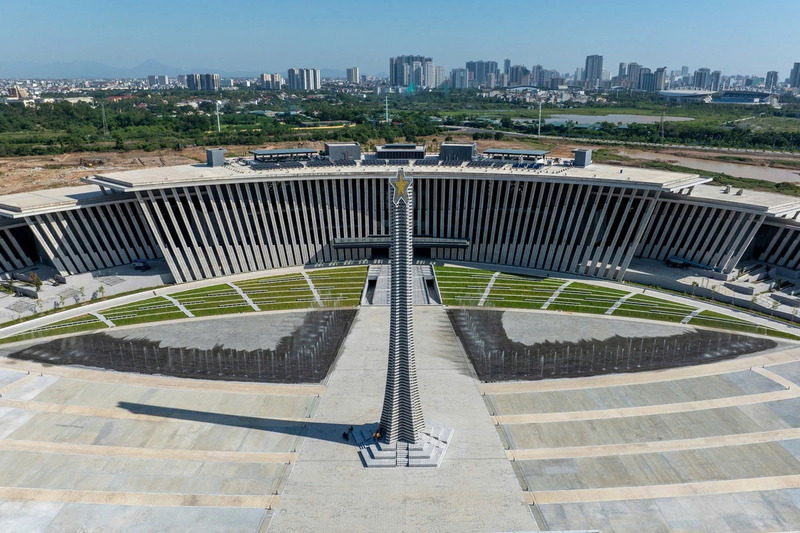
Since 2019, the Ministry of National Defense has invested in building the new Vietnam Military History Museum in Tay Mo and Dai Mo wards in Nam Tu Liem district on an area of up to 386,600 m2. The museum area has a front yard and Victory Tower, next to it is a museum block with 4 floors above ground and 1 ground floor, with a construction area of 23,198 m2. The total floor area of the main building is up to 64,640 m2 and the total height is 35.8 m.
The architecture of the museum building is inspired by the concept of “Heaven, Earth and Sea”, these are the 3 natural elements that form the country and also represent the 3 main forces of our country’s army. It can be said that the Vietnam Military History Museum is not only a work displaying the history of war, but also a common space for visitors to interact and experience the heroic atmosphere throughout the journey to national independence of the Vietnam People’s Army.
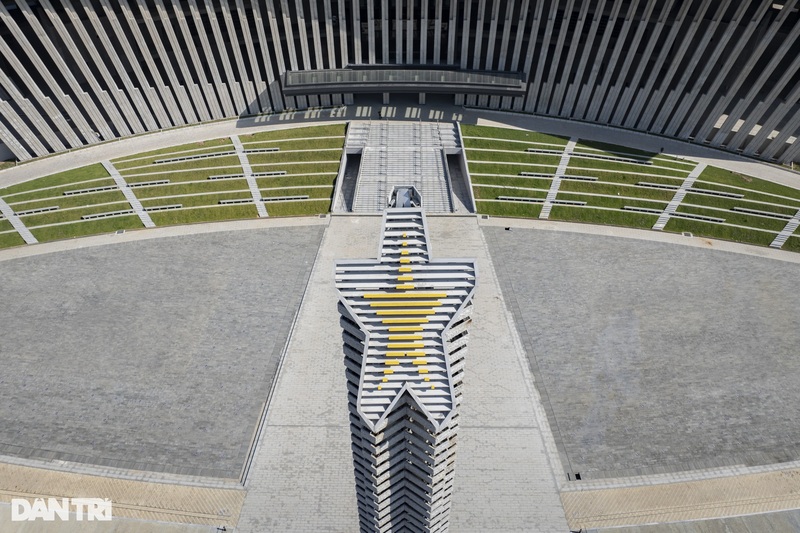
The Victory Tower of the Vietnam Military History Museum is 45 m high, representing the year 1945 when our nation gained independence. The top of the tower is beveled at 60 degrees, forming a 5-pointed star overlapping each other as if reaching the blue sky. In addition, the pentagonal base of the tower also represents the 5 socialist classes: intellectuals, farmers, workers, businessmen and soldiers.
The new museum has a modern design and many functions. Currently, the Vietnam Military History Museum has completed phase 1 and is collecting comments from experts and scientists to complete and adjust the display before opening to the public.
3.2 Division of areas of the Vietnam Military History Museum
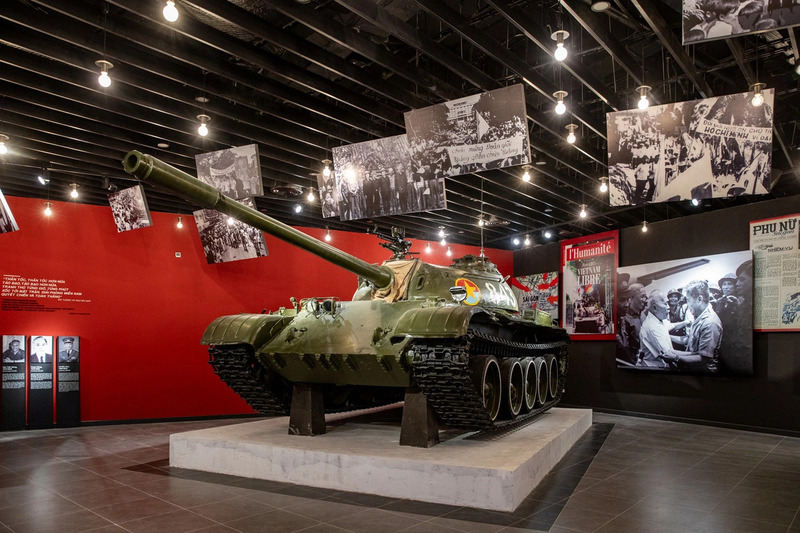
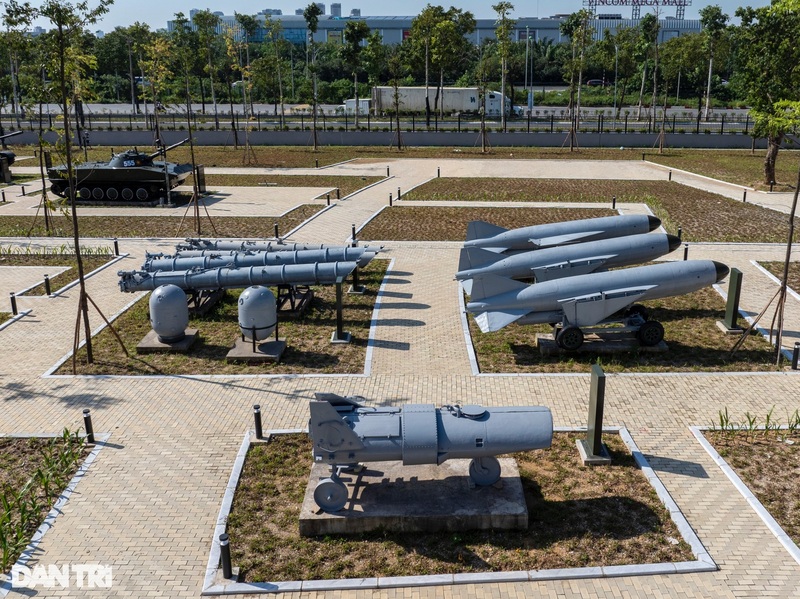
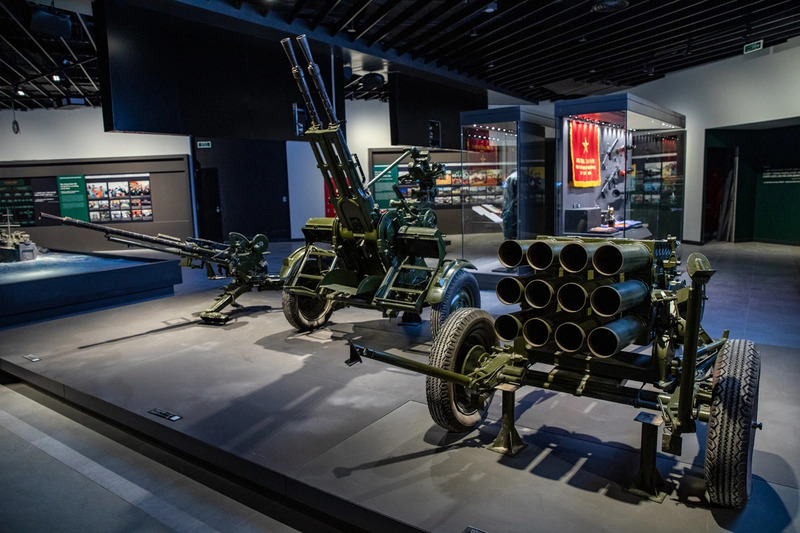
The right and left wings of the Vietnam Military History Museum are areas displaying outdoor artifacts, including weapons and equipment used by the Vietnam People’s Army in the two resistance wars against France and the US; and also used in training and combat readiness to protect the country’s peace. Some typical artifacts include: 85mm cannon, PT67 tank number 555, MiG 17 aircraft number 2047…
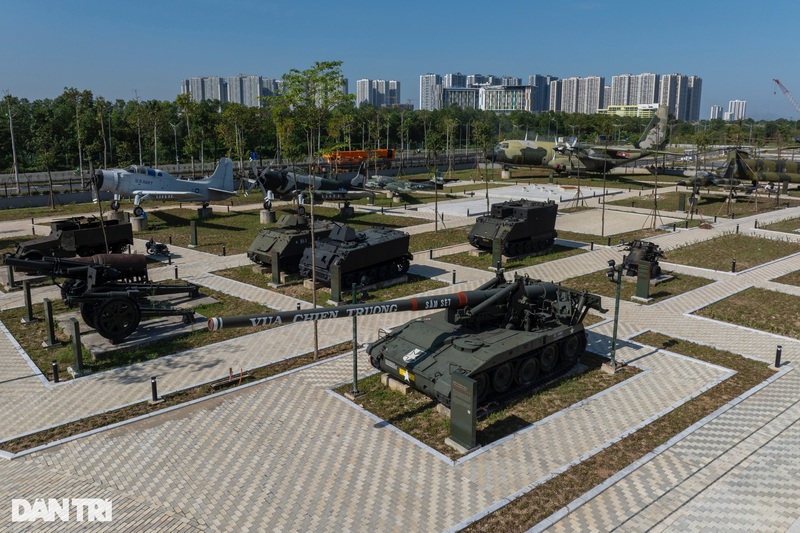
On the right side of the museum, you can see weapons and military equipment used by France and the US in the war on display, including artillery, tanks, and infantry fighting vehicles. In particular, tourists to Hanoi can see the 175mm M-107 self-propelled gun, also known as the “king of the battlefield”. Or the planes left behind by the US military after the war such as A37, CH47, F5E, C130 and dozens of other types of bombs and ammunition.
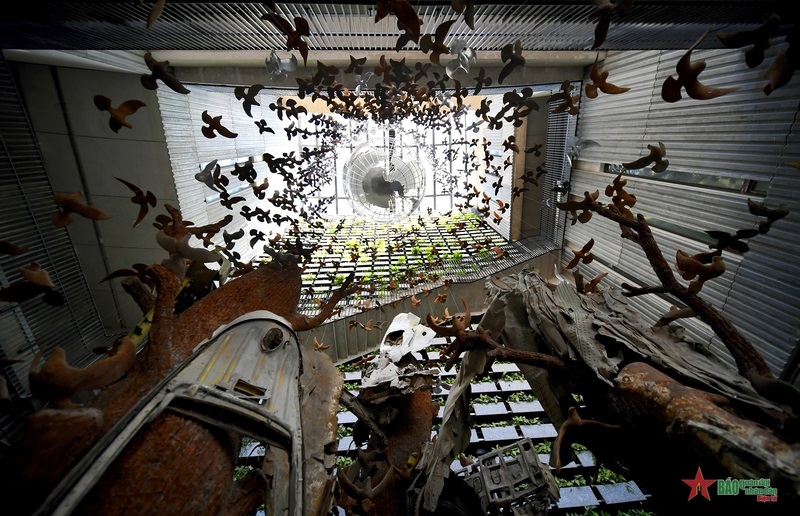
In the space on both sides of the building, the architects cleverly arranged the symbol of the desire for peace with tree branches, green shoots and doves flying up from the plane wreck. This part represents the value of peace and Vietnam’s desire for peace with the peoples of the world. The globe and mirrors reflect the history of building and defending the country of our people from the time of King Hung to the 20th century, thereby affirming the desire to maintain peace and accepting the exchange and sacrifice of blood for the country’s independence and freedom.
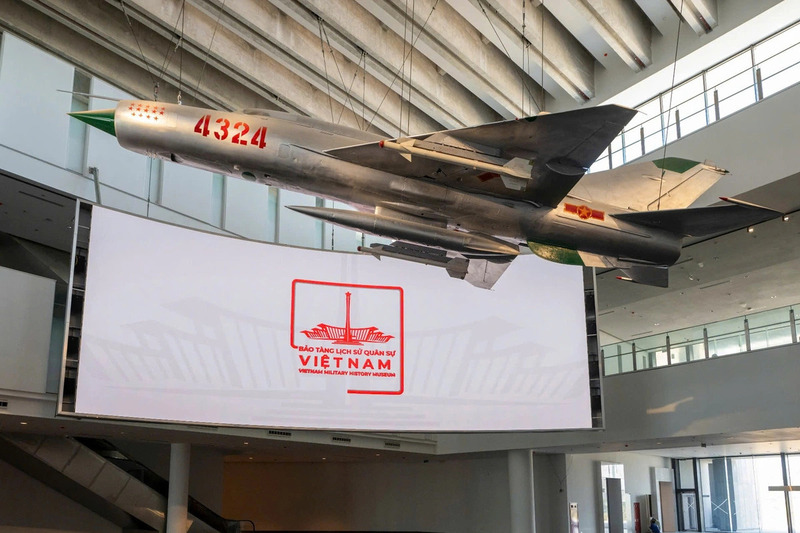
Entering the main hall, you will see the display area of the “Silver Swallow” MiG-21 with the serial number 4324. The fighter jet is impressive when it is hung on cables attached to the roof, creating the feeling of flying to protect the country’s airspace. Next to the plane is a vivid LED screen introducing the beauty of our country and the historical, cultural, and traditional content of building and defending the country.
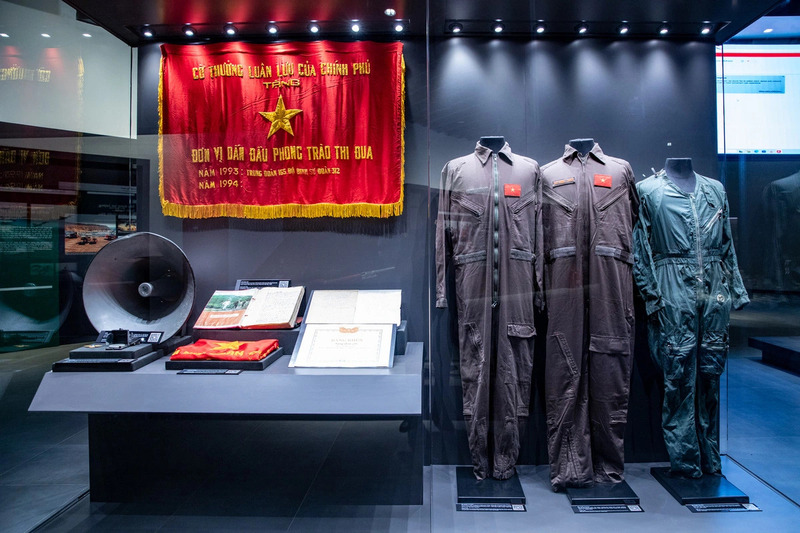
During the years of resistance against the US, there were 9 pilots who flew the “Silver Swallow”, took off 69 times, faced the enemy 22 times, fired 16 times, and shot down 14 US planes. On the body of the fighter plane were printed 14 red stars symbolizing the 14 planes that were shot down. This artifact was also recognized as a National Treasure by the Prime Minister on January 14, 2015.
4. Main themes displayed inside the museum
The main exhibition spaces in the Vietnam Military History Museum on the first floor are divided into 6 themes:
– Theme 1: The early period of building and defending the country.
– Theme 2: Protecting independence from 939-1858.
– Theme 3: Fighting against French colonialism, gaining national independence from 1858-1945.
– Theme 4: Resistance against French colonialism, 1945-1954.
– Theme 5: Resistance against the US from 1954-1975.
– Theme 6: Building and defending the country from 1976 to present.
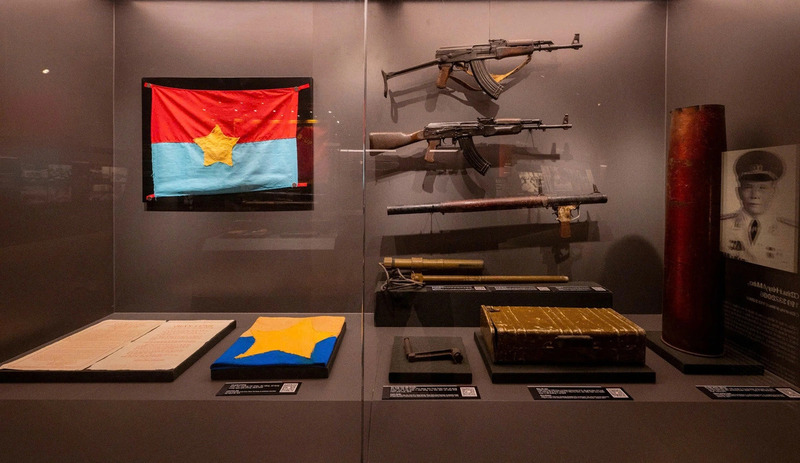
The main themes are reproduced in chronological order and appropriate layout. The artifacts are specifically annotated with information about the event. In particular, it is also shown through many methods such as 3D mapping technology, information lookup screen, image documents, automatic audio guide, QR code to look up information about artifacts, video clips introducing campaigns/battles/historical figures…
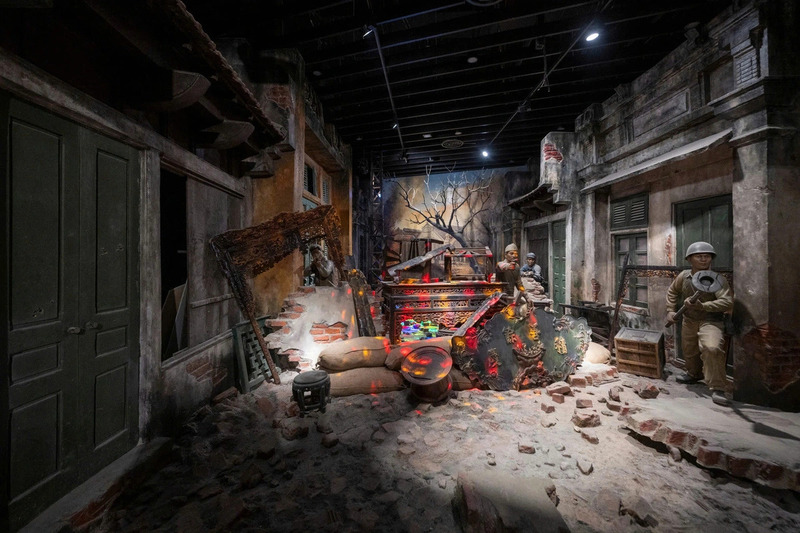
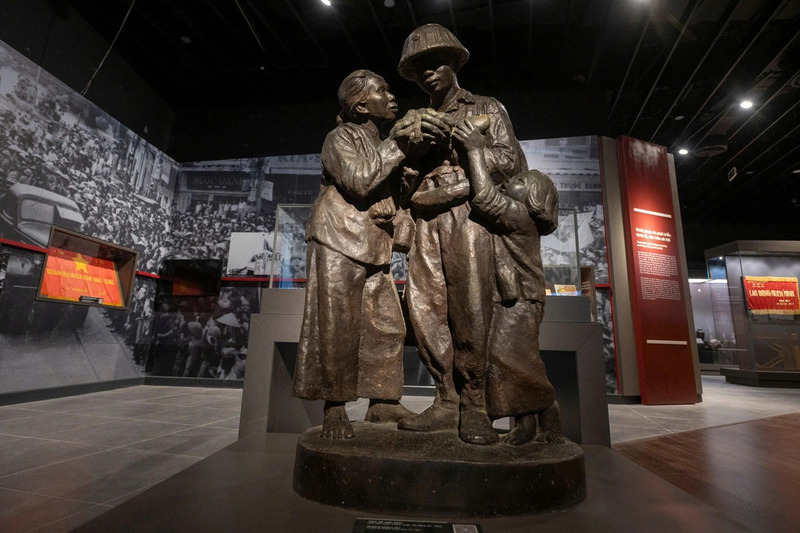
In the exhibition space of theme 4, besides the artifacts, you can also find vivid animation models at a ratio of 1:1, vividly recreating the space of Hanoi streets during 60 days and nights of fighting in response to President Ho Chi Minh’s call for National Resistance.

The Vietnam Military History Museum is a meaningful project to celebrate the 80th anniversary of the founding of the Vietnam People’s Army. Hopefully, with the useful information provided by Acnos, you will have an unforgettable experience.